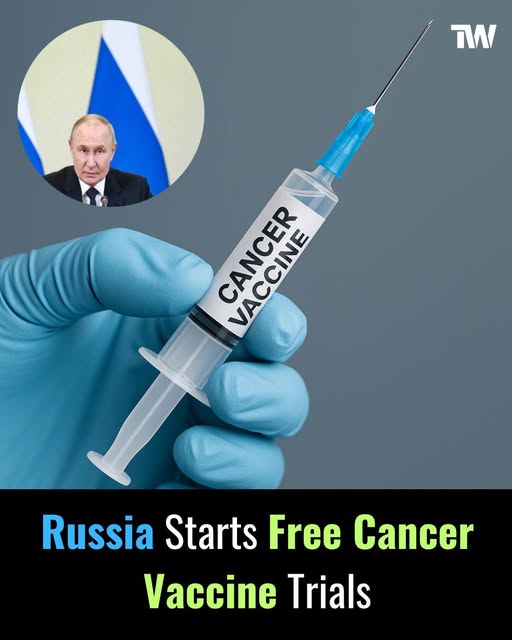

The announcement came with a flash of light across the global scientific community. For years, the promise of personalized medicine in oncology had been a distant, tantalizing goal—a whisper in the halls of research labs. But now, from Moscow, it was a thunderous declaration. Russia, through its renowned Gamaleya Center, had officially begun human trials for a personalized mRNA melanoma vaccine.
The story of how they reached this point was a tale of rapid innovation, fueled by a powerful combination of artificial intelligence and a national push for medical advancement. It began not with a single eureka moment, but with the quiet, relentless work of a small team of computational biologists and oncologists. They had a radical idea: what if a cancer vaccine could be built not just for a disease, but for a single, unique patient?
The traditional approach to cancer treatment, even in the age of immunotherapy, often felt like a blunt instrument. A drug designed to target a common protein might work for some, but for others, it would fail, their tumors having a different genetic signature. The new Russian initiative sought to change that paradigm completely.
Their process, a marvel of modern medicine, started with a small biopsy of a patient’s tumor. That tiny sample of tissue, containing the chaotic, mutated DNA of the cancer cells, was fed into a massive supercomputer. The AI, a neural network trained on millions of genetic data points, went to work. In a process that once took months or even years, the AI was able to sequence the tumor’s genome, identify the specific, unique mutations—the “neoantigens”—that made the cancer cells foreign to the body, and design a custom mRNA sequence to target them.
This wasn’t a one-size-fits-all vaccine. This was a blueprint for a biological weapon, handcrafted to seek and destroy a single enemy. And the speed was astonishing. The entire process—from biopsy to a vial of vaccine ready for injection—was completed in just one week.
The first human trials, scheduled for September-October 2025 at Moscow’s leading cancer centers, were a monumental step. For the patients selected for the trial, it represented not just a new treatment, but a new hope. They were receiving a therapy that was literally made just for them.
And there was another layer to this groundbreaking initiative: the cost. The estimated production cost of a single dose was substantial, around 300,000 rubles. However, in a move that underscored the national commitment to this project, the Russian government announced that the vaccine would be provided free of charge to all eligible Russian citizens. This wasn’t just a clinical trial; it was a public health statement, a promise to its people that the future of cancer treatment would be accessible, not just for the wealthy, but for everyone.
As the news spread, the world watched. Rival biotech companies and research institutions in the US and Europe, already working on their own personalized mRNA vaccine programs, took note. Russia’s speed and state-funded approach had put it in a leading position in this new frontier of oncology. The preclinical results, showing promising efficacy in suppressing tumor growth and reducing metastasis, hinted at a future where cancer might be treated less like a widespread enemy and more like a specific, solvable puzzle. This was more than just a medical breakthrough; it was a strategic move on the global stage of scientific innovation. The race to cure cancer had a new, powerful contender, and the world was holding its breath to see what would happen next.