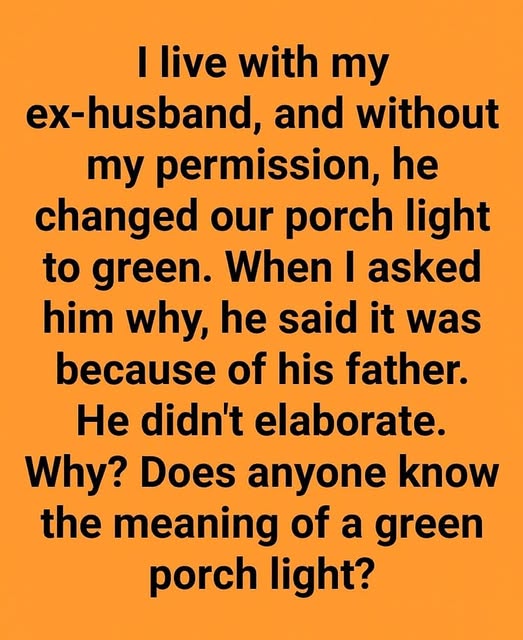

After my ex-husband moved back in temporarily, I noticed something strange—our porch light had been replaced with a green one. I hadn’t agreed to any changes, so I asked him about it. He simply said, “It’s for my dad,” who had passed away recently. But he didn’t elaborate.
That led me down a path of research—and what I found was far more meaningful than I expected.
What Does a Green Porch Light Actually Mean?
Green porch lights have become a powerful symbol in many communities across the U.S. and beyond. While the color green can mean different things depending on the context, it often represents hope, healing, and support. Here’s what that green glow might signify:
Support for Military Veterans
One of the most well-known meanings comes from the “Greenlight A Vet” campaign, launched in 2013. Organized in partnership with veteran support organizations, the initiative encourages people to change one visible light to green as a symbol of gratitude for U.S. veterans transitioning back into civilian life.
The color green was chosen because it represents renewal, peace, and stability—all qualities that reflect a veteran’s journey home.
Mental Health Awareness
Green is also the color of mental health awareness. In recent years, people have used green porch lights to show support for mental health initiatives, particularly during Mental Health Awareness Month in May or on World Mental Health Day (October 10).
The calming effect of green is thought to represent healing, growth, and emotional balance—making it a fitting tribute for mental health advocacy.
Solidarity, Grief, and Community Remembrance
In some cases, green porch lights are used to honor those lost to illness or tragedy, or to unite neighbors after a community hardship. From natural disasters to personal loss, the color green offers a quiet way to say: “You’re not alone.”
How to Set Up a Green Porch Light
Want to join the movement? Here’s how to display your own green light with intention:
Step 1: Choose Your Cause
Whether you’re honoring a veteran, raising mental health awareness, or remembering a loved one, identifying the reason behind your green light helps you share its meaning with others.
Step 2: Pick the Right Bulb
- Buy a green LED bulb – energy-efficient and widely available.
- Use a green sleeve or cover – a simple option for temporary displays.
- Avoid painting bulbs, as this may affect safety and brightness.
Step 3: Install the Bulb
Make sure the power is off, swap the bulb safely, and test it once installed. It’s a small change that creates a noticeable impact.
Step 4: Add a Sign (Optional)
To help others understand your message, you can add a small note near your door. For example:
“This green light honors veterans. Thank you for your service.”
Why Green? The Psychology Behind the Color
Green is strongly associated with nature, balance, safety, and renewal. It’s no surprise that it’s often chosen to represent healing, recovery, and strength. Whether you’re focusing on physical health, emotional well-being, or respect for service, green carries a peaceful and meaningful tone.
A Growing Global Symbol
While the green porch light movement started in the U.S., it has expanded around the world. From Australia to Europe, people have adopted this simple act of lighting up their homes in green to support causes close to their hearts.
Here’s the Takeaway: A Light That Speaks Volumes
I never thought a porch light could hold so much meaning. But after learning about its symbolism, I now see it as more than just a bulb—it’s a quiet tribute, a form of outreach, and in some cases, a way of healing.
Whether you’re honoring someone’s memory, standing with a cause, or simply offering silent support, turning your porch light green is a small gesture that carries a big message.
Have you ever seen a green light in your neighborhood? What do you think it meant? Share your thoughts or personal story below—we’d love to hear from you.