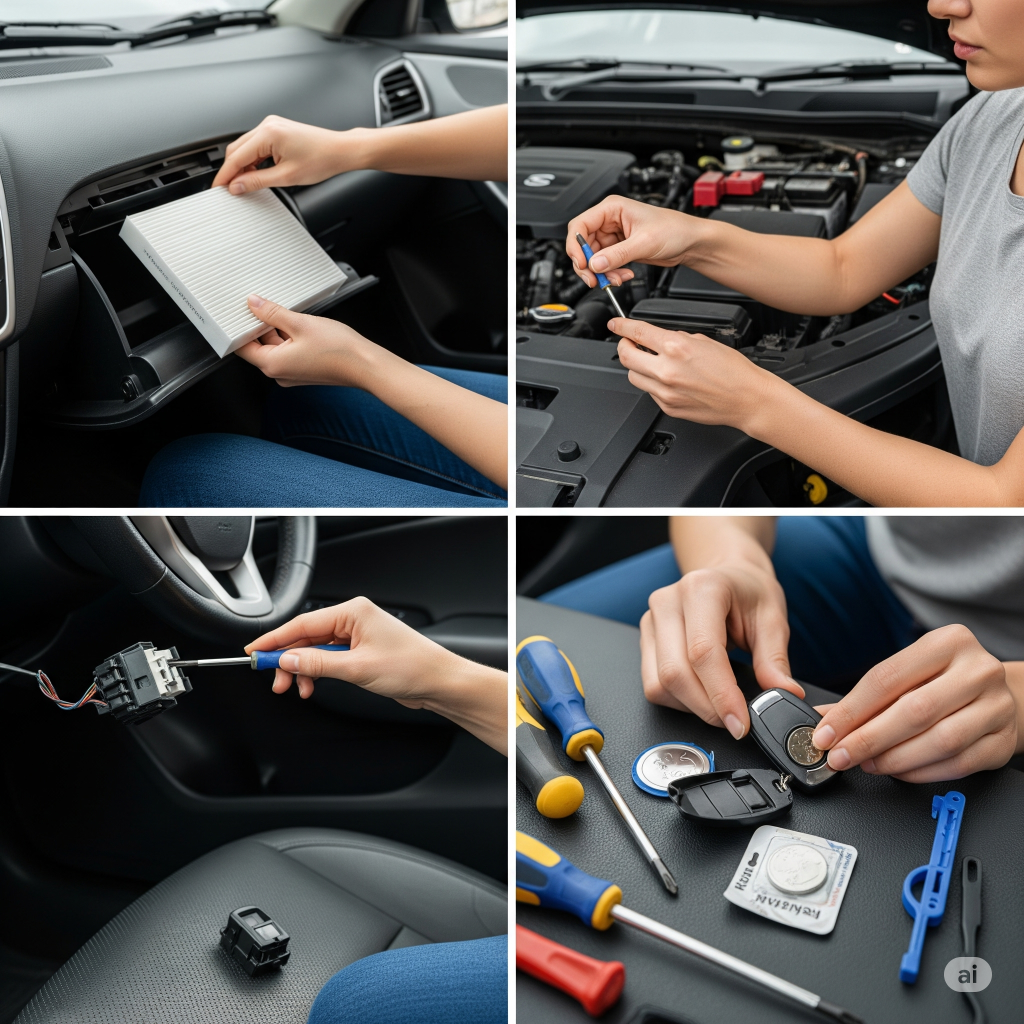

While some online “hacks” are pure fiction, many of the tips you see for common car issues are based on real, legitimate maintenance tasks that you absolutely can do at home. We’ll break down five of the most popular DIY fixes and give you the knowledge you need to save money and feel more confident under the hood.
1. The “Broken” Window Switch
The Claim: A repair shop will charge you a fortune to fix a broken window switch, but you can buy a replacement part online for cheap and install it in minutes.
The Reality: This one is largely true for many car models. A window switch is an electrical component that, when it fails, is often replaced as a single unit. The part itself is often inexpensive from an aftermarket supplier. The repair process typically involves carefully prying off the door panel trim, unplugging the old switch, and snapping in the new one.
Before you try it:
- Check the part number: Make sure you buy the correct replacement switch for your car’s specific make, model, and year.
- Watch a tutorial: Search for a video tutorial specific to your car. You’ll see how to safely remove the trim without breaking it.
- Consider a pro: If your window motor is the problem, or if the switch requires complex programming, this DIY might not be for you.
2. The Stinky AC System
The Claim: A foul odor from your AC vents means the repair shop will upsell you on an expensive, unnecessary “sterilization,” when all you need to do is replace a dirty filter.
The Reality: The source of that musty, old-sock smell is very often a clogged or moldy cabin air filter. This is one of the easiest and most common maintenance tasks you can do yourself. The filter is designed to trap dust, pollen, and other debris before it enters your car’s ventilation system. A clogged filter restricts airflow and can harbor bacteria, causing that bad smell.
How to fix it:
- Locate the filter: On most cars, the cabin air filter is located behind the glove box.
- Buy a new one: A new cabin air filter costs between $15 and $40.
- Swap it out: Simply pop open the glove box, remove the old filter, and slide in the new one. You’ll notice an immediate improvement in airflow and smell.
3. The Broken Side Mirror Glass
The Claim: If your side mirror glass is cracked, you can simply pry it off and replace it yourself with a cheap piece of glass from online.
The Reality: This applies to the mirror glass itself, not the entire mirror housing. On many cars, the mirror glass is a separate piece held on by clips. You can indeed use a plastic pry tool or even a key to carefully unclip the broken mirror. Replacement glass is available online and can often be a perfect fit.
A few things to know:
- Heating and sensors: Be aware if your mirror has features like heating elements, blind spot sensors, or auto-dimming. These will add to the complexity and cost of the replacement part.
- Careful prying: Use a soft plastic tool to avoid scratching your car’s paint or the mirror housing.
4. Fixing a “Panel Gap” with Rubber Stoppers
The Claim: A gap in your car’s hood or panels can be fixed by simply twisting the rubber stoppers underneath the hood.
The Reality: The rubber stoppers, known as hood bumpers or adjusters, are designed to support the hood and prevent it from rattling. While adjusting them can sometimes help with minor hood alignment issues, it is not a cure-all for all panel gaps. A significant gap in a car’s body panels is often a sign of a more serious issue, such as:
- An improperly aligned fender or bumper.
- Damage from a past collision.
- Misaligned mounting points.
If adjusting the rubber stoppers doesn’t work, it’s best to have a professional body shop take a look.
5. Unlocking Your Car with a Dead Key Fob
The Claim: You can still open your car door with a key fob that has a dead battery by finding the hidden keyhole.
The Reality: This is a crucial and often overlooked feature on modern cars. Most keyless entry systems have a backup mechanical key tucked inside the fob. The car door itself has a hidden lock cylinder, usually concealed by a plastic cap on the door handle.
How to find it:
- Look for a small notch or hole on the bottom of the door handle.
- Use the key (or a flat-head screwdriver) to gently pry the cap off.
- This will reveal the traditional keyhole, allowing you to manually unlock the door.
This is a perfect example of a useful piece of information that can save you a frustrating moment in a parking lot.
While it’s smart to be a savvy consumer and avoid overpaying for simple repairs, it’s also important to know your limits. For anything more complex than these minor fixes, always consult a trusted, certified mechanic. After all, your safety and your car’s long-term health are worth more than a quick shortcut.