
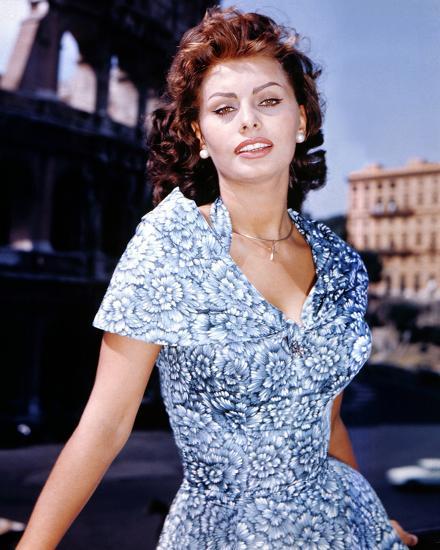
In the golden summer of 1955, amid the sun-drenched charm of the Italian coast, a young Sophia Loren captivated audiences in Scandal in Sorrento (Pane, amore e…). Directed by Dino Risi, this romantic comedy marked the third installment in a beloved Italian film series and provided Loren with a role that would help define the early years of her remarkable career. With a mix of irresistible charm, humor, and undeniable screen presence, Loren’s performance signaled that she was more than just a beautiful face—she was a rising force in international cinema.

A Star on the Rise
By the mid-1950s, Sophia Loren had already begun making waves in Italian cinema. Born Sofia Villani Scicolone in Rome in 1934, Loren had grown from a pageant contestant into a promising actress with an unmistakable magnetism. Scandal in Sorrento came at a crucial turning point in her early career. It wasn’t her first major role, but it was the one that solidified her image in the hearts of European audiences and caught the attention of the international film world.
In the film, Loren plays Donna Sofia, a lively fish vendor who becomes the object of affection for the town marshal, played by Vittorio De Sica. Set in the picturesque seaside town of Sorrento, the story plays out as a light-hearted romantic triangle, filled with misunderstandings, flirtation, and comedic charm. But it was Loren’s vivacity and emotional depth that elevated the film beyond mere escapism.
Beauty, Wit, and Emotional Nuance
What makes Loren’s performance so enduring is not just her beauty—though her iconic features certainly enchanted audiences—but the way she conveyed the complexities of a strong, independent woman navigating love, expectations, and her own desires. Donna Sofia was no caricature; she was confident, smart, and entirely her own person. Loren imbued her with warmth and humanity, giving viewers a heroine who was both magnetic and relatable.
The chemistry between Loren and De Sica—already a legend of Italian cinema—was palpable. Their playful banter and shifting dynamics gave the film an emotional richness that was rare in romantic comedies of the time. Loren’s ability to balance humor with sincerity, glamour with grit, proved she could command the screen with ease.

A Snapshot of 1950s Italian Cinema
Scandal in Sorrento wasn’t just a showcase for Loren; it was part of a broader cultural movement. Postwar Italian cinema in the 1950s was undergoing a transformation. While neorealism had dominated the immediate aftermath of World War II, a new wave of films—often romantic, comedic, and deeply human—began to emerge. These films, set in everyday locales with relatable characters, reflected the hopes, dreams, and social shifts of a changing nation.
Dino Risi, one of the masters of Italian comedy, captured the spirit of this era with an affectionate eye for both the beauty and the absurdity of life. His direction in Scandal in Sorrento is light and fluid, perfectly matching the tone of the film and allowing Loren’s performance to shine without ever overshadowing the ensemble.

May you like


A Gateway to Global Fame
The success of Scandal in Sorrento propelled Loren further onto the international stage. Just a year later, she would begin working on international co-productions and Hollywood films, including The Pride and the Passion (1957) with Cary Grant and Frank Sinatra. These roles would catapult her to global stardom, but it was in Sorrento, amid the laughter and sun-drenched streets, that Loren’s unique talent came into full bloom.
It was also the beginning of a fruitful working relationship with many of Italy’s cinematic greats—Vittorio De Sica, in particular, would go on to direct her in some of her most critically acclaimed films, including Two Women (La ciociara, 1960), for which she would win the Academy Award for Best Actress.

A Lasting Legacy
Today, Scandal in Sorrento remains a beloved gem in Sophia Loren’s filmography—a reminder of her roots, her early artistry, and the magnetic qualities that would define her career. The film continues to charm audiences, not just for its humor and setting, but for the sheer presence of Loren, whose performance transcended language and culture.
At a time when film icons were often molded into narrow roles, Loren stood apart. She was glamorous, yes, but also grounded. She could play a queen or a peasant, a seductress or a mother, always with grace and authenticity. Scandal in Sorrento allowed her to explore those layers—and in doing so, it gave the world a glimpse of the star she was becoming.
More than half a century later, that image of Sophia Loren—radiant under the Mediterranean sun, full of laughter and spirit—remains etched in the collective memory of cinema. In Scandal in Sorrento, she didn’t just star in a film; she lit up an era.
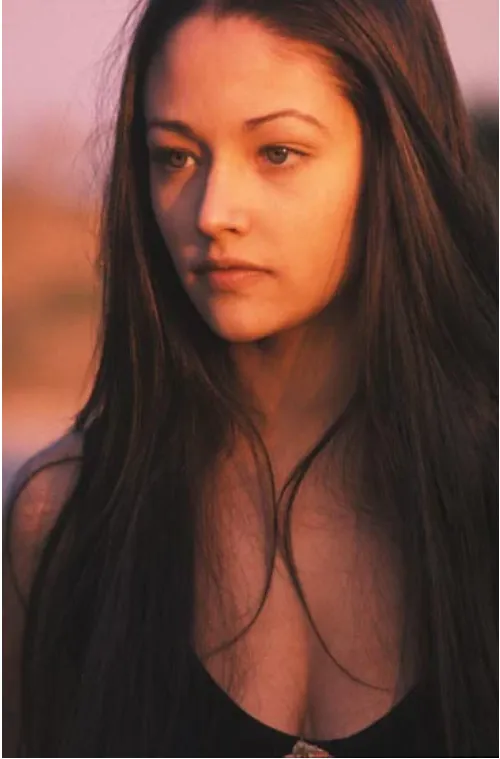
She was Juliet to the world at 15 — but Olivia Hussey’s real story was far more dramatic than any script.

When Olivia Hussey first appeared as Juliet in Franco Zeffirelli’s Romeo and Juliet in 1968, audiences across the globe felt they were seeing Shakespeare’s heroine for the very first time. Barely 15 years old when the film was shot, Hussey brought a breathtaking combination of innocence, passion, and vulnerability to the role. She wasn’t simply acting—she was embodying Juliet, making her real for an entirely new generation. The film itself was revolutionary in its choice to cast actual teenagers as the star-crossed lovers, and Hussey’s performance became the heart of its success. Her luminous beauty and emotional sincerity made Juliet unforgettable, and almost overnight she became an international sensation.